Before you scan
Check these prerequisites first:
- Device and carrier support: Confirm that your carrier supports eSIM on your particular phone. Google specifically recommends checking the device’s IMEI or device ID with the carrier if you bought the phone elsewhere. [2]
- Internet access: Have Wi-Fi or a hotspot available. Apple lists this as a setup requirement, while noting exceptions for some eSIM-only iPhones in certain countries and regions. [3]
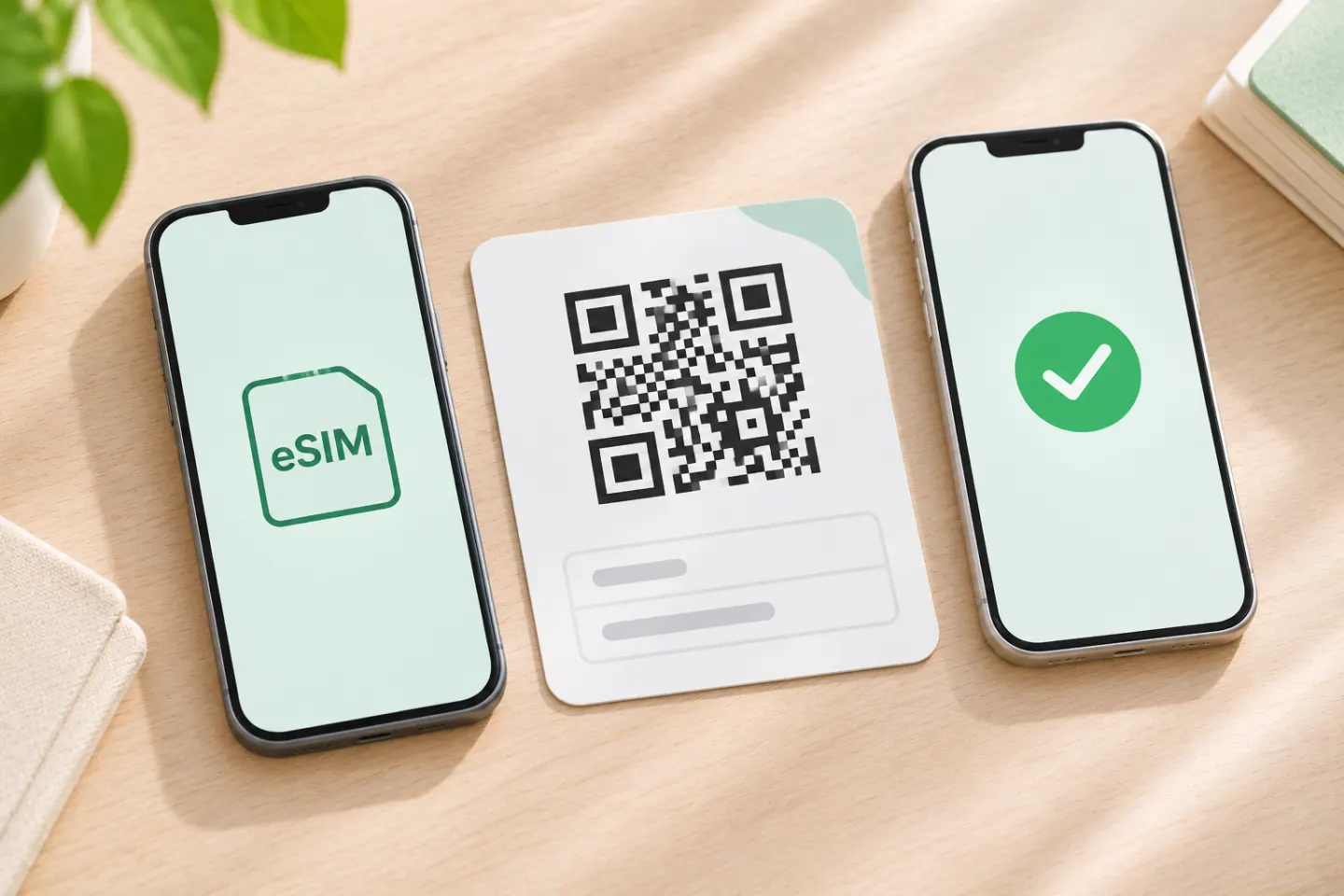
- Carrier-issued activation details: Use the QR code supplied for your activation, and have any separate confirmation code ready. [1]
- Unlock status when switching carriers: On iPhone, check Settings > General > About > Carrier Lock. “No SIM restrictions” means it is unlocked. Only your current carrier—not Apple—can unlock it for another carrier. [4]
How to scan an eSIM QR code on iPhone
During initial setup
At the cellular setup screen, choose Use QR code and follow the prompts. [1]
After your iPhone is already set up
- Open Camera and point it at your carrier’s QR code.
- Tap the cellular-plan notification.
- Follow the prompts to continue and add the plan.
- Enter the carrier’s confirmation code if requested. [1]
If the QR code is on the same iPhone
On iOS 17.4 or later, Apple supports touching and holding a carrier QR code received in a default email app or browser, then choosing Add eSIM. Use this option when the carrier’s QR code is already on the phone. If unavailable, ask about a carrier link, app, or manual activation details. [1]
How to add an eSIM on Android
Use the instructions for your manufacturer. Samsung cautions that screens and settings vary by carrier, software version, and model; Google also notes carrier-specific differences. [5]
Google Pixel
- Open Settings.
- Select Network & internet > SIMs > Add SIM > Set up an eSIM.
- Follow the on-screen instructions for your carrier’s activation method. If that flow requests a QR code, use the code your carrier supplied. [2]
Google’s written guide establishes this Settings route but does not promise an identical QR-scanning screen for every carrier. If setup does not detect your plan, your carrier may need to activate the eSIM first. [2]
Samsung Galaxy
- Open Settings > Connections > SIM manager > Add eSIM.
- Tap Scan QR code.
- Scan your carrier’s code and complete the prompts.
- Restart the device to apply the profile, as Samsung instructs. [5]
If the code is on the same Android phone
A practical workaround is to display the carrier’s code on another trusted screen, then scan it from the phone’s eSIM setup flow. Do not assume every Android phone can import a QR screenshot: the official guides cited here do not establish a universal photo-import method. Follow your carrier’s alternative instructions if you cannot display the code elsewhere. [2]
Common problems and what to do
The QR code is not recognized
First distinguish failure to read the code from an activation error after it is read. Retry using the supported method above: Camera on iPhone or the eSIM setup flow on Android. If the code remains unusable, ask your carrier to confirm the activation method and details. [1]
Do not assume that a screenshot is automatically invalid. Apple explicitly supports certain on-screen codes; what matters is whether your device supports the way you are opening the code and whether the carrier’s activation details remain valid. [1]
The code is read, but the plan cannot be added
Confirm device eligibility and carrier support before repeatedly rescanning. For Pixel, Google recommends carrier confirmation of the IMEI or device ID. If you are switching carriers on iPhone, check Carrier Lock as described above. Neither issue is fixed by a clearer QR image. [2]
The eSIM appears in settings, but service does not work
Check that the intended line is enabled and selected for the service you want to use. Samsung documents these controls in SIM manager; Verizon also identifies a disabled or incorrectly selected SIM as a possible cause of service problems. [5]
For iPhone, Apple recommends trying these steps in order, checking for the carrier after each:
- Turn Airplane Mode on and off.
- In Settings > Cellular, turn the affected line off and back on if it appears.
- Restart the iPhone.
- Check Settings > General > About for a carrier-settings update. [3]
You deleted the eSIM or want to reuse an old code
Do not delete an installed eSIM simply to retry scanning. As a carrier-specific example, Verizon says it must generate a new profile after an eSIM is deleted. That does not establish a universal single-use rule for every carrier’s QR codes. Ask your provider whether to transfer, redownload, or replace the profile before removing it. [6]
When to contact your carrier
If setup still fails, record the exact error and ask the carrier to check device eligibility, account activation, and whether replacement activation details are needed. Verizon documents that an eSIM/account mismatch can prevent connection; Google directs persistent setup problems to the carrier. [6]
For iPhone support, Apple recommends having your phone number, account verification information, and IMEI or EID available. Find the device identifiers under Settings > General > About. [3]
References
[1] Apple Support — Set up eSIM on iPhone — https://support.apple.com/en-us/118669
[2] Google Pixel Help — Set up a new eSIM — https://support.google.com/pixelphone/answer/16115470?hl=en
[3] Apple Support — If you can’t set up an eSIM on your iPhone — https://support.apple.com/en-us/102478
[4] Apple Support — How to unlock your iPhone for use with a different carrier — https://support.apple.com/en-us/109316
[5] Samsung US Support — SIM cards for your Galaxy phone or tablet — https://www.samsung.com/us/support/answer/ANS10001619/
[6] Verizon — SIM card not working, eSIM not working — https://www.verizon.com/support/troubleshooter/sim-card-not-recognized/